KDP Baby Log Daily Planner Notebook: A Comprehensive Interior Solution for Creators and Parents
The intersection of digital publishing and analog parenting tools has created a unique niche in the self-publishing market. For creators, entrepreneurs, and parents alike, the KDP Baby Log Daily Planner Notebook represents more than just a tracking tool; it is a bridge between modern content creation workflows and the timeless need to document early childhood development. This specific interior solution addresses a critical gap for Amazon KDP publishers seeking high-quality, pre-formatted assets while simultaneously serving end-users who desire a structured yet aesthetically pleasing method for recording infant care routines.
In an era where digital fatigue is prevalent, new parents are increasingly returning to physical journals to track feeding schedules, sleep patterns, and developmental milestones. However, the demand extends beyond simple utility. Modern consumers expect these physical products to be visually engaging, incorporating baby elements, illustrations, and icons that soften the clinical nature of data tracking. For KDP authors and low-content book creators, sourcing interiors that balance this aesthetic appeal with technical compliance is often the primary bottleneck. This 137-page interior package resolves that friction by providing a tested, bleed-ready asset that aligns with current marketplace expectations for quality and design coherence.
Evolving Standards in Low-Content Publishing
The landscape of Kindle Direct Publishing has shifted significantly over the last few years. The market is no longer receptive to generic, unformatted lines or basic tables. Success now hinges on specificity and user experience. A Baby Log Daily Planner Notebook KDP Interior with baby elements illustrations and icons exemplifies this evolution. It moves away from sterile spreadsheets and embraces a design language that resonates emotionally with the target demographic. This shift mirrors broader trends in consumer goods where functionality must coexist with emotional design.
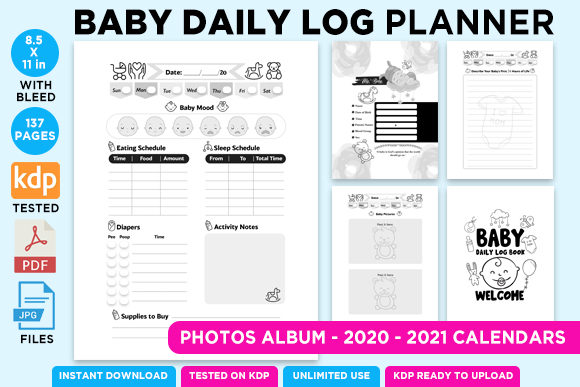
For professionals and marketers entering this space, understanding this pivot is essential. The value proposition of this interior lies in its comprehensive structure. It is not merely a collection of blank pages but a curated system containing 137 pages of purposeful content. This includes dedicated sections for the baby’s information, historical calendars for 2020 and 2021, narrative pages for describing the first 24 hours of life, and photo album layouts. These additions transform a simple logbook into a keepsake hybrid, increasing the perceived value of the final printed product. For the creator, this means a higher potential price point and better differentiation in a saturated category.
Technical Precision and Workflow Efficiency
One of the most significant challenges in self-publishing is ensuring technical accuracy. Margins, bleed settings, and resolution standards are unforgiving on platforms like Amazon KDP. This interior package is specifically engineered to mitigate these risks. The files are provided at a size of 8.625 x 11.25 inches with bleed, which is the precise specification required for standard trim sizes when full-page graphics extend to the edge. This pre-formatting eliminates the guesswork and trial-and-error phase that often delays publication.
The inclusion of both PDF and JPG formats offers strategic flexibility for different types of users:
- PDF Files: Ideal for direct upload to KDP or professional print shops. The vector-based nature of PDFs ensures that text remains crisp and lines stay sharp regardless of printing scale, maintaining the professional integrity of the planner.
- JPG Files: These serve creators who wish to customize or remix the interior. Having individual page images allows designers to import specific layouts into Canva, Photoshop, or InDesign to create variations, add custom branding, or build entirely new products using the foundational elements.
This dual-format approach acknowledges the diverse workflows of modern creators. Whether you are a freelancer looking for a quick upload solution or a business owner building a branded series of parenting journals, the assets are accessible without watermarks, ensuring full commercial rights and creative freedom.
Anatomy of a Functional Baby Log Interior
To understand why this specific interior performs well, one must analyze its component parts through the lens of user utility. A successful baby log must reduce cognitive load for exhausted parents. The structure of this 137-page notebook is designed to facilitate quick entry rather than extensive writing.
Daily Tracking Architecture
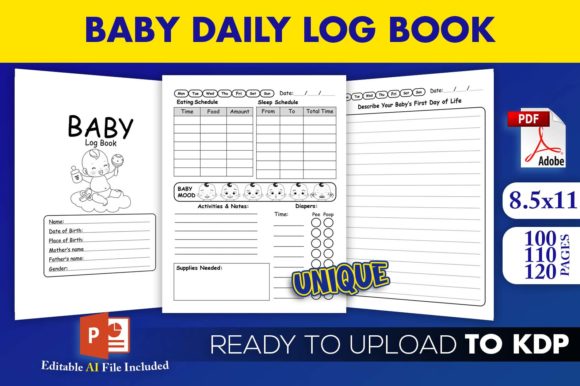
The core of the planner is the daily log section. Unlike generic notebooks, these pages are segmented to capture specific data points efficiently:
- Eating and Sleeping Schedules: Visual trackers allow parents to log times and durations at a glance, helping to identify patterns and establish routines.
- Diaper Tracking: Essential for monitoring health and hydration, integrated seamlessly into the daily flow without feeling clinical.
- Mood and Activity Notes: Space for qualitative data that captures the personality and developmental progress of the child.
- Supplies to Buy: A practical addition that turns the log into a household management tool, preventing forgotten essentials during grocery runs.
This multi-faceted approach ensures the notebook serves as a central command center for infant care. For the KDP publisher, highlighting these specific features in book descriptions and A+ content can significantly improve conversion rates by demonstrating tangible utility to prospective buyers.
Sentimental and Archival Elements
Beyond daily logistics, the inclusion of sentimental sections addresses the long-term value of the product. The "First 24 Hours" description pages and photo album sections encourage users to treat the book as a memory keeper. This duality—functional tracker plus emotional archive—is a key trend in the parenting journal market. It justifies a premium positioning compared to disposable tracking apps or plain notebooks. The 2020 and 2021 calendars, while dated, serve as contextual anchors for families documenting past events or creating retrospective memory books, though creators should note this when marketing to ensure alignment with buyer intent.
Practical Implications for Creators and Businesses
For educators, bloggers, and influencers in the parenting niche, this interior offers a pathway to productization. Instead of spending hundreds of hours designing a compliant interior from scratch, professionals can leverage this ready-to-upload asset to focus on marketing and audience building. The absence of watermarks is particularly crucial here; it allows for white-labeling and brand integration, enabling creators to present the final product as their own proprietary offering.
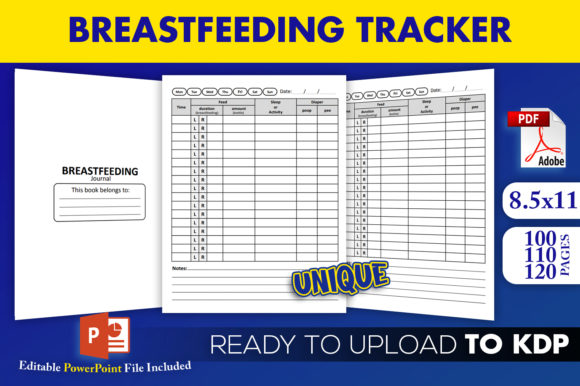
Furthermore, the availability of JPG source files supports an iterative design process. Marketers can test different cover designs paired with the same interior, or modify internal pages to create niche-specific variants (e.g., a "Newborn Twin Tracker" or "Breastfeeding Focus Journal") using the base assets. This modularity is essential for scaling a low-content publishing business efficiently.
From a production standpoint, the 8.625 x 11.25 inch bleed specification ensures compatibility with both KDP printing and external print-on-demand services or local print shops. This versatility allows business owners to diversify their sales channels. You might sell the KDP version on Amazon while offering a premium, spiral-bound version through a local vendor using the same high-resolution PDF files. This omnichannel potential maximizes the return on investment for the interior asset.
Aligning with Modern Parenting and Market Trends
The relevance of the KDP Baby Log Daily Planner Notebook extends beyond technical specs; it taps into the cultural moment of intentional parenting. Millennial and Gen Z parents are data-informed but aesthetically conscious. They reject cluttered, outdated designs in favor of clean, illustrative interfaces even in analog formats. The baby elements and icons included in this interior satisfy this preference for "Instagrammable" organization. It validates the parent's effort to stay organized while providing a visually soothing experience during stressful periods of newborn care.
Additionally, the rise of hybrid digital-analog workflows supports the continued demand for physical logs. While apps exist for tracking, many parents find screen time disruptive during bonding moments. A physical notebook allows for documentation without the distraction of notifications or blue light. By positioning this KDP interior as a tool for mindful parenting, creators can connect with buyers on a deeper level than mere functionality.
Strategic Recommendations for Implementation
When utilizing this interior, creators should adopt a user-first mindset in their listing optimization. Clearly articulate the 137-page count and the specific sections included. Transparency builds trust. Since the interior contains fixed-year calendars (2020/2021), honest communication prevents negative reviews regarding date relevance. Frame these as archival features or focus marketing heavily on the undated daily logs and sentimental sections which remain evergreen.
Consider bundling this interior with complementary digital products, such as printable milestone cards or nursery decor, to create a cohesive ecosystem. The JPG assets make this cross-promotion visually consistent. For freelancers offering book formatting services, this interior serves as a reliable template for clients in the parenting niche, reducing turnaround time and ensuring professional results.
Ultimately, the Baby Log Daily Planner Notebook KDP Interior with baby elements illustrations and icons is a foundational asset for serious publishers. It combines technical readiness with thoughtful design, addressing the dual needs of creator efficiency and user satisfaction. In a market that rewards quality and specificity, having a 100% formatted, tested, and watermark-free resource allows entrepreneurs to bypass production hurdles and focus on what matters most: connecting valuable tools with the families who need them. Whether printed at home, in an office, or via a professional shop, the result is a polished product ready to support the demanding journey of early parenthood.