Evaluating the KDP Blog Post Planner Content Creator for Low-Content Publishing
For self-publishers and digital product creators, the barrier to entry on Amazon KDP has lowered significantly, but the standard for quality has risen. The KDP Blog Post Planner Content Creator represents a specific category of publishing assets designed to bridge the gap between raw idea generation and a print-ready manuscript. Unlike generic journal templates or complex design software, this resource targets a niche intersection: content creators who need physical organization tools and publishers seeking tested, compliant interiors for low-content books.
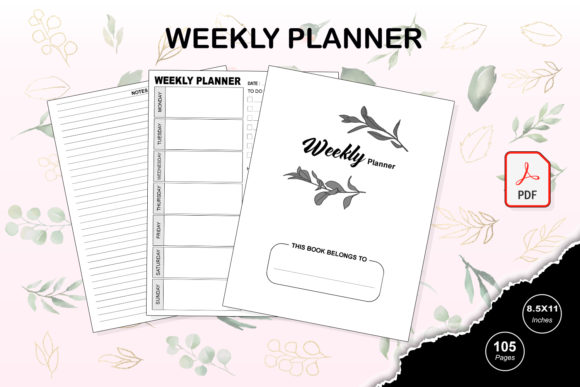
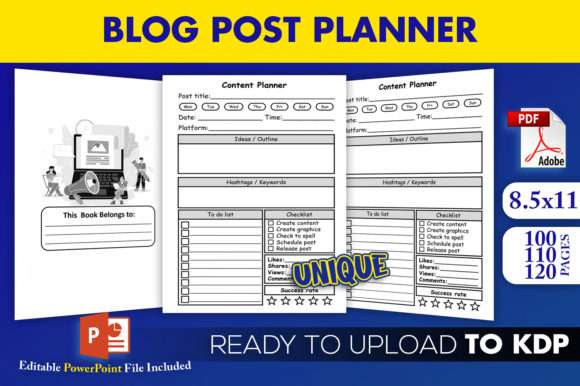
Understanding the specific utility of this planner requires looking beyond the marketing claims and examining the technical deliverables. The package includes an editable PowerPoint (PPTX) source file alongside three distinct PDF interiors formatted at 8.5×11 inches. These PDFs are pre-set at 100, 110, and 120 pages and have been tested for KDP compliance. For adults aged 20–50 evaluating whether to purchase this asset or create one from scratch, the decision often hinges on the tradeoff between customization speed and unique brand identity.
Technical Specifications and Platform Compliance
The most critical factor in KDP publishing is avoiding rejection during the automated review process. Many creators spend hours designing interiors only to face errors regarding margins, bleed, or spine width. The KDP Blog Post Planner Content Creator addresses this friction point by providing files that have already passed platform testing. This "tested on KDP" designation is significant because trim size and page count directly dictate spine width and margin safety zones.
The inclusion of three specific page counts (100, 110, and 120) offers strategic flexibility rather than arbitrary variety. In the low-content book market, page count influences perceived value and printing costs. A 100-page planner may serve as an affordable entry-level product, while a 120-page version can justify a higher price point or accommodate more comprehensive blogging schedules. By providing high-resolution PDFs for each variation, the resource eliminates the mathematical guesswork involved in resizing documents, which often leads to pixelation or misalignment when amateurs attempt to modify template sizes.
Furthermore, the 8.5×11 trim size is the industry standard for functional planners. While smaller formats like 6×9 exist for portability, blog planning typically requires ample space for content calendars, keyword research tables, and drafting areas. Choosing this larger format aligns with the practical needs of the end-user, distinguishing it from compact journals intended solely for diary entries.
The Role of the Editable PPTX Source File
While the ready-to-upload PDFs provide immediate utility, the editable PowerPoint source file is arguably the most valuable component for long-term business building. PowerPoint is often overlooked in favor of Adobe InDesign or Canva, yet it remains a powerful tool for low-content publishing due to its ubiquity and ease of use. Most professionals in the 20–50 demographic already possess basic proficiency with PPTX, reducing the learning curve associated with specialized layout software.
This source file allows for deep customization without compromising structural integrity. Users can modify fonts, adjust header placements, add branding elements, or alter prompt text while maintaining the correct safe zones. This contrasts sharply with flattened PDF templates where editing requires expensive software and advanced technical skills. However, users must recognize the limitations: PowerPoint is not a vector-based design program. Complex graphical manipulations may result in lower output quality compared to professional design suites. The KDP Blog Post Planner Content Creator is best suited for text-heavy or structured layouts rather than illustration-heavy artistic journals.
Comparing Approaches: Templates vs. Custom Design
When researching resources for blog planning books, creators generally face three options: hiring a ghostwriter/designer, building from scratch using design software, or utilizing pre-made assets like this planner creator. Each approach carries distinct tradeoffs regarding cost, time, and uniqueness.
- Custom Design: Building a planner from zero ensures 100% originality and perfect alignment with a specific brand voice. However, this requires mastery of margin calculations, bleed settings, and interior formatting. For a single title, the return on time investment is often negative unless the creator plans to publish a large series.
- Generic Free Templates: While cost-effective, free resources frequently lack KDP testing. They may also be oversaturated in the marketplace, making it difficult to rank organically. Additionally, free templates rarely include editable source files, limiting commercial viability.
- Premium Pre-Made Assets: The KDP Blog Post Planner Content Creator sits in the middle ground. It offers professional formatting and compliance assurance at a fraction of custom design costs. The tradeoff is that other users may have access to similar base structures. Success with this option depends heavily on how effectively the user leverages the editable PPTX to differentiate the final product.
For creators who view publishing as a volume-based business model, pre-tested assets significantly accelerate production velocity. Conversely, for authors building a premium personal brand where every visual element must be bespoke, this resource might serve better as a structural foundation than a final solution.
Evaluating Fit for Different User Personas
Determining whether this specific planner creator is the right choice depends on your current position in the publishing journey. It is particularly well-suited for:
- New KDP Publishers: Those who have never uploaded a low-content book before benefit immensely from the "tested" status of these files. It removes technical anxiety and allows focus on keyword research and cover design.
- Bloggers Monetizing Their Audience: Content creators looking to sell physical merchandise to their readers can use the PPTX to insert their own logo, blog URL, and proprietary frameworks, creating a branded product without hiring a designer.
- Series Builders: Publishers creating quarterly or annual planner series can maintain consistent formatting across multiple editions using the standardized page counts provided.
However, this resource may not be ideal for illustrators or artists whose planners rely primarily on hand-drawn elements rather than structured grids. Similarly, those targeting non-standard trim sizes (such as square formats or pocket guides) will find the fixed 8.5×11 dimensions restrictive, as resizing would negate the benefits of the pre-tested margins.
Strategic Considerations for Market Differentiation
Access to high-quality interiors is necessary but insufficient for sales. Because the KDP Blog Post Planner Content Creator provides a framework, the competitive advantage must come from how the user adapts that framework. When comparing this product against alternatives, consider the depth of the interior prompts. Generic "blog planner" interiors often fail because they lack specificity. Effective adaptation involves modifying the PPTX source to include niche-specific sections—such as SEO tracking for tech bloggers, recipe testing grids for food bloggers, or sponsorship outreach trackers for lifestyle influencers.
The high-resolution nature of the provided files ensures that any added text or simple graphics remain crisp at print size. This is a crucial quality indicator; low-resolution interiors lead to blurry text and negative reviews. When evaluating this product against cheaper alternatives, verify that the resolution supports professional printing standards. The inclusion of multiple page counts also aids in A/B testing market demand. A publisher could release the 100-page version to test a new niche, then expand to the 120-page version if initial traction validates the concept.
Understanding Limitations and Best Practices
No single resource solves every publishing challenge. While the KDP Blog Post Planner Content Creator streamlines interior creation, it does not address cover design, metadata optimization, or marketing. Users should avoid the misconception that a "ready-for-upload" interior guarantees sales. The interior is merely the product; the listing and cover are the packaging.
Additionally, users must respect licensing terms. Typically, these resources allow for modification and publication but prohibit reselling the source files themselves. Always verify the specific license included with your download. From a practical standpoint, always order a proof copy even when using pre-tested files. Paper stock variations, printer calibration differences, and personal modifications can introduce variables that digital previews cannot capture. Treating the provided PDFs as a verified baseline rather than an infallible guarantee is the mark of a professional publisher.
Ultimately, the value of this content creator lies in its balance of convenience and customizability. It serves as a robust infrastructure for those who understand that in low-content publishing, efficiency in production creates space for creativity in marketing and niche targeting. By leveraging the editable PPTX and validated PDF formats, creators can bypass technical hurdles and focus on delivering genuine value to the blogging community.