KDP Interior Credit Card Payment Tracker Design
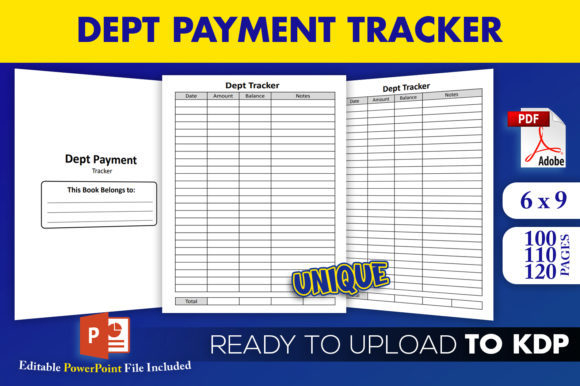
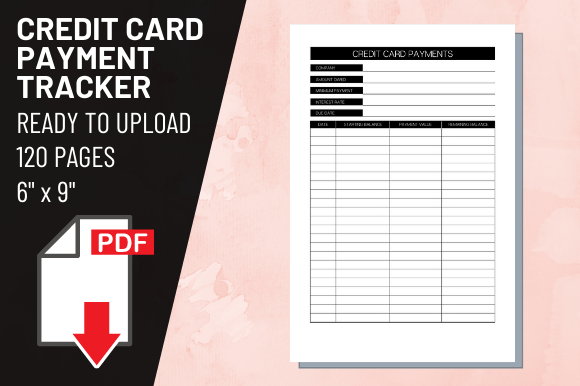
Achieving financial clarity requires more than just discipline; it demands a functional interface that bridges the gap between user intent and visual organization. For designers and self-publishers creating low-content books, the KDP Interior Credit Card Payment Tracker serves as a prime example of how utilitarian layout design directly influences user experience and product viability. This specific 6″ x 9″ format is not merely a collection of lines but a carefully engineered grid system that balances whitespace with data entry zones to ensure readability and long-term usability.
The Intersection of Utility and Visual Hierarchy
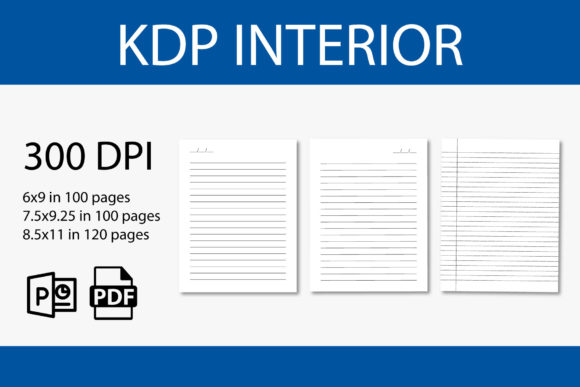
In the realm of editorial design and print production, functionality is the ultimate aesthetic. When evaluating a credit card payment tracker KDP interior, professional creators must look beyond basic table structures to understand the underlying visual hierarchy. A high-quality 300dpi PDF ensures that every hairline rule and typographic element prints with crisp precision, eliminating the grayish fuzziness that often plagues amateur digital products. This technical fidelity is essential for maintaining a premium brand identity, even in niche utility publications.
Effective visual communication in this context relies on reducing cognitive load. The 120-page count provides substantial value without becoming unwieldy, while the no-bleed specification simplifies the printing process and keeps critical content safely within the margin. From a UX design perspective, this constraint forces a disciplined approach to composition, ensuring that writing spaces are generous enough for handwriting while maximizing the printable area.
Key Technical Specifications for Print Quality
When integrating this asset into a broader creative workflow or publishing strategy, understanding the technical parameters is vital for consistent results:
- Resolution: 300dpi guarantees sharp text and clean lines, meeting professional print standards.
- Dimensions: The 6″ x 9″ trim size offers a portable form factor ideal for everyday carry and retail shelving.
- Format: Ready-to-upload PDF streamlines production, removing guesswork from file preparation.
- Safety Margins: No-bleed design protects content integrity across varying print-on-demand tolerances.
Applications in Branding and Product Development
While primarily a functional tool, this tracker exemplifies principles applicable to wider graphic design and branding projects. The minimalist aesthetics required for effective financial tracking mirror modern trends in UI design and web layouts, where clarity trumps decoration. Designers can study these interiors to better understand grid systems, typographic scaling, and information architecture.
For marketers and business owners, such assets demonstrate how structured design builds trust. Just as a logo design communicates stability through balanced geometry, a well-crafted payment tracker communicates reliability through consistent alignment and legible typography. These same principles translate seamlessly to social media graphics, packaging design, and presentation decks, where organizing complex information visually is paramount.
Evaluating Design Assets for Professional Use
Selecting the right creative assets involves assessing both aesthetic alignment and technical compatibility. Whether you are building a suite of financial planners or seeking inspiration for corporate stationery, consider these factors:
- Typographic Legibility: Ensure fonts remain readable at small sizes and in grayscale printing.
- Consistency: Verify that header styles, line weights, and spacing remain uniform throughout all 120 pages.
- User-Centric Layout: Confirm that input fields align with natural writing patterns and hand positioning.
- Scalability: Assess whether the design system can be adapted for other formats or digital adaptations.
Enhancing Creative Projects Through Structured Design
The discipline inherent in designing a KDP Interior Credit Card Payment Tracker offers valuable lessons for any visual communicator. It reinforces the importance of negative space, systematic repetition, and purposeful restraint. In an era saturated with visual noise, the ability to create calm, organized, and intuitive layouts is a distinguishing skill. Whether applied to merchandise, advertising campaigns, or digital products, these foundational design choices elevate the perceived value of the final output.
Ultimately, thoughtful design transforms mundane tasks into engaging experiences. By prioritizing technical quality, visual hierarchy, and user needs, creators can produce assets that are not only aesthetically pleasing but genuinely useful. Investing in professionally crafted interiors like this 6″ x 9″ tracker ensures that your published works meet the highest standards of print design, fostering trust and satisfaction among end users while streamlining your own creative production workflow.