Streamlining Security and Organization with a Customizable KDP Visitor Log Book Interior
In an era where digital solutions dominate administrative tasks, the tangible reliability of a physical logbook remains a cornerstone of security and organization for businesses, educational institutions, and private facilities. Whether managing a bustling corporate office, a secure government building, or a small business storefront, tracking who enters and exits your premises is not merely a bureaucratic formality; it is a fundamental aspect of safety, liability management, and operational efficiency. For entrepreneurs and administrators looking to create professional-grade tracking tools without hiring expensive graphic designers, a specialized KDP Visitor Log Book Interior offers a perfect blend of convenience, customization, and readiness.
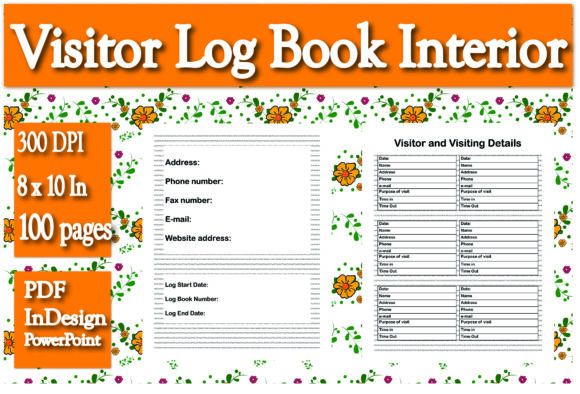
This comprehensive resource provides a pre-formatted interior designed specifically for Amazon KDP (Kindle Direct Publishing) or traditional printing needs. With a versatile 8 x 10-inch size and a substantial 100-page count, this template serves as a robust foundation for creating high-quality visitor sign-in books. More importantly, it bridges the gap between static templates and fully custom designs by including editable source files alongside print-ready PDFs.
The Critical Role of Visitor Management in Modern Facilities
To understand the value of a well-designed logbook interior, one must first appreciate the multifaceted purpose of visitor tracking. In modern facility management, a visitor log is more than just a list of names; it is a legal document, a safety protocol, and a data collection tool.
Safety and Emergency Compliance
The primary function of any visitor log is accountability during emergencies. In the event of a fire, natural disaster, or security lockdown, first responders need an accurate, up-to-the-minute record of every non-employee currently inside the building. A standardized logbook ensures that this information is captured consistently. When using a structured interior like this 8 x 10 template, the uniform layout allows security personnel to quickly scan entries during high-stress situations, potentially saving critical seconds during an evacuation.
Legal Liability and Audit Trails
Beyond immediate safety, visitor logs serve as an audit trail. If an incident occurs involving a guest, contractor, or delivery person, the logbook provides timestamped evidence of their presence. This documentation can be vital for insurance claims, legal disputes, or internal investigations. The specific fields included in this template—such as "Purpose of Visit" and precise "Time In/Time Out" entries—are designed to capture the granular details necessary for these records to hold up under scrutiny.
Professionalism and First Impressions
The sign-in process is often the very first interaction a guest has with an organization. A tattered notebook with uneven lines suggests disorganization, whereas a professionally printed, cleanly formatted logbook communicates competence and attention to detail. By utilizing a high-quality KDP interior, businesses can ensure their front desk reflects their brand standards without the cost of commercial offset printing.
Breaking Down the Essential Data Fields
A common misunderstanding among those new to creating administrative forms is that "more space is better." In reality, effective logbook design requires a careful balance of data density and usability. This specific interior template includes the following critical fields, each serving a distinct operational purpose:
- Date: Essential for chronological sorting and archiving. Even if the book covers a single month, having the date on every line prevents confusion if pages are referenced out of order later.
- Name: The primary identifier. The layout provides adequate spacing for legible handwriting, which is crucial when reviewing logs retrospectively.
- Address: Often overlooked in digital systems but vital for physical logs. This aids in contact tracing, mailing follow-up correspondence, or verifying identity against government-issued IDs.
- Phone & E-mail: Dual contact methods ensure reachability. In post-pandemic environments, this data also supports health and safety notification protocols if exposure risks are identified after a visit.
- Purpose of Visit: This field transforms a simple attendance sheet into an analytical tool. Tracking whether visits are for interviews, deliveries, maintenance, or client meetings helps organizations understand traffic patterns and allocate resources accordingly.
- Time In & Time Out: Precise timestamps are non-negotiable for security compliance. They establish duration of stay and verify that visitors have actually departed the premises at the end of the day.
Understanding the Technical Specifications: Why 8 x 10 Inches?
The choice of trim size significantly impacts the utility of a logbook. While standard letter-sized paper (8.5 x 11) is common in offices, the 8 x 10 inch dimension selected for this KDP interior offers unique advantages for bound books.
First, the slightly reduced width makes the book easier to handle and store on crowded reception desks. It fits comfortably in standard shelving and filing systems while still providing ample horizontal space for all required data columns. Second, this size is optimized for Amazon KDP’s printing specifications, ensuring no margin issues or bleed errors occur during production. For users printing locally, 8 x 10 is a widely supported custom size at most print shops, making it a versatile choice regardless of the production method.
The 100-page count is equally strategic. At approximately four to six entries per page (depending on the specific row height configuration), this volume accommodates roughly 400 to 600 visitor records. For a medium-traffic office, this translates to one to three months of usage per book, striking an ideal balance between longevity and manageable archival storage.
The Power of Editable Source Files: InDesign and PowerPoint
What truly distinguishes this package from generic, static PDF templates is the inclusion of editable source files. Many users assume they must accept a template exactly as-is, but true utility comes from adaptability.
Adobe InDesign File (.indd)
For professionals and experienced designers, the InDesign file represents total creative control. Users can adjust column widths, change fonts to match corporate branding, modify header/footer elements, or add logo placements with precision. This level of customization ensures the final product feels bespoke rather than templated. It also allows for technical adjustments, such as modifying bleed settings or gutter margins based on specific binding requirements.
PowerPoint File (.pptx)
Recognizing that not everyone has access to professional design software, the inclusion of a PowerPoint file democratizes customization. PowerPoint’s familiar interface allows beginners to edit text, move elements, and adjust layouts without a steep learning curve. This is particularly valuable for small business owners, teachers, or community organizers who need to make quick modifications—such as adding a school name or changing the "Purpose of Visit" dropdown options—but lack design expertise. This dual-format approach embodies the principle of accessible design, ensuring the template serves users across the skill spectrum.
Print-Ready PDF
For those who require immediate deployment without modifications, the pre-formatted PDF eliminates all technical barriers. This file is configured with proper margins, bleed, and resolution for direct upload to KDP or handoff to a local printer. It represents the "plug-and-play" option that maintains professional quality standards out of the box.
Practical Applications Across Different Sectors
The versatility of this visitor log interior extends far beyond traditional corporate lobbies. Understanding its cross-sector applications helps illustrate its broader relevance:
- Educational Institutions: Schools and universities use these logs to track parent volunteers, substitute teachers, and maintenance crews. The "Purpose of Visit" field is especially important here for distinguishing between routine and emergency access.
- Healthcare Facilities: Clinics and nursing homes require stringent visitor tracking for patient privacy and infection control. The structured format supports HIPAA-compliant record-keeping practices when combined with proper front-desk protocols.
- Real Estate and Property Management: Open houses, tenant showings, and contractor visits all benefit from standardized logging. Property managers can use the data to analyze peak viewing times or track vendor service hours.
- Creative Studios and Co-working Spaces: These environments often have fluid membership and frequent guest collaborators. A well-designed logbook adds structure to otherwise informal spaces without sacrificing aesthetic appeal.
- Residential Communities: HOAs and gated communities use visitor logs to monitor guest access, delivery services, and amenity reservations, enhancing both security and resident satisfaction.
Best Practices for Implementation and Maintenance
Even the best-designed logbook fails without proper implementation. Users should establish clear protocols for consistent data entry. Train front desk staff to verify information rather than passively accepting self-reported entries. Consider pairing the physical logbook with digital backup procedures, such as weekly photography or transcription, to prevent data loss from damage or theft.
Additionally, be mindful of privacy regulations. While collecting addresses and phone numbers is operationally useful, ensure compliance with local data protection laws. Some jurisdictions may require signage informing visitors why their data is collected and how long it will be retained. The customizable nature of this template allows users to add privacy notices directly to the header or introductory pages, demonstrating proactive compliance.
Conclusion: Empowering Efficient Facility Management
A visitor log book is deceptively simple in concept yet profoundly important in execution. This KDP Visitor Log Book Interior package recognizes that simplicity should not come at the expense of functionality or professionalism. By combining industry-standard data fields, an optimized 8 x 10 trim size, and unprecedented editing flexibility through both InDesign and PowerPoint files, it empowers users to create security tools that are as unique as their organizations.
Whether you are a seasoned facilities manager seeking to standardize documentation across multiple locations, a small business owner creating your first professional sign-in system, or an educator organizing classroom volunteers, this template provides the structural foundation you need. It transforms the mundane task of visitor tracking into an organized, compliant, and professionally presented process. In doing so, it reinforces the message that even the most basic administrative functions deserve thoughtful design and careful execution. The result is not just a book—it is a commitment to safety, order, and operational excellence.